|
|
This itinerary was originally written for a mixed family with some members of limited walking endurance and with a child that was staying in Gardiner and is therefore from that perspective. Ajust if entering/exiting via another gate. If you have more time, you can spread it out more and/or spend more time watching wildlife.
All distances and driving times I’ve included are from The Official Guide to Touring America’s First National Park: a Yellowstone Forever publication available in many languages that I suggest you order now. You can find it and lots of other good stuff at https://shop.yellowstone.org/tripplanning.
Those times are straight driving times – no stops for features or wildlife so remember to allow time for those stops in your planning. General rule of thumb: the slower you drive, the more you’ll see. Use pullouts to allow faster travelers to pass you. When you stop to view wildlife, you can NOT block any part of the road – you must be in a pullout or have all four tires outside the white shoulder lines.
Day 1:
Enter through Roosevelt Arch. For first-timers this is usually the first photo stop.
5 miles up the road, about 15 minutes travel time, you’ll arrive in Mammoth. This time let’s pass the stores and head straight for the Hot Springs where you can see some of the features from the road by taking the Upper Terrace Drive (possible to see black bears and grizzly bears here – members of both species have ranges that include this are). If you are up to some walking at this point you can take some of the boardwalks through the thermals. There are short spur trails and loops. If you aren’t up to walking right now you can do so later. Since you’re staying in Gardiner “all roads lead to Mammoth.” You’ll have more opportunities.
After visiting the Mammoth Hot Springs (or not), continue south. The next major junction is Norris Junction. On the way you’ll pass Obsidian Mountain, Roaring Mountain, Twin Lakes, etc. This is good grizzly habitat. Upon arriving at Norris Junction you can turn east toward Canyon or proceed south toward Madison and eventually Old Faithful. I’m going to suggest you get Old Faithful out of the way. Mammoth Hot Springs to Norris is 21 miles – about 40 minutes driving time.
If you’re up to a short walk at this point, the Porcelain Basin Self-guiding trail is .75 miles round trip and is easy dirt/gravel and boardwalk. Other walks in the area are the Back Basin trail and Artists’ Paint Pots. I enjoy both of those but they might not be the best way to use up limited walking energy or endurance.
Back on the road continue south to Madison Junction. There’s a good picnic area there. If you’re packing lunch it might be a good time to have a picnic. If not, you might just let your daughter run around there for bit and let everyone out to rest in shade. There are no thermals to worry about and less crowd so your daughter can be loose some there. There are food vendors at Old Faithful, the next stop, if you are not packing lunch.
Leaving Madison Junction continue south. Take the Firehole Canyon Road. Back on the main road, continue south towards OF. Distance to Old Faithful is 16 miles – 35 minutes. Along the way, Fountain Paint Pot is only a .5 mile loop walk. Midway Geyser basin is also .5 mile loop walk.
When you come to Old Faithful stop at the Visitor Education Center to find out what time the next predicted eruption is (or, you can visit geysertimes.org on your mobile or use the GeyserTimes App – there is service there). If an eruption is imminent, make for the boardwalk. If Castle, Grand, Riverside, or Beehive geyser eruptions are upcoming soon, those are all great. If not, have some lunch and/or check out the Old Faithful Inn. Once again, if you’re up to it there are short walking opportunities around Old Faithful. I’ll recommend that you not use limited walking endurance going all the way to Morning Glory Pool (unless you feel up to it and/or there are imminent predicted eruptions of Riverside, Daisy or Grand Geysers).
When you’ve had your fill of Old Faithful and the Upper Geyser Basin, you can either turn back northward, as I’m going to spell out or loop east and eventually north again.
Assuming you are going back roughly the way you came you can stop at Black Sand Basin which has Emerald Pool, Cliffside Geyser and Sunset Lake. This is a pretty area where you can see a great deal with a very short walk and is often overlooked.
Continuing north, take the Firehole Lake Drive. This short detour off the main road takes you by Great Fountain Geyser (awesome even when not erupting!), White Dome Geyser, Pink Cone, Narcissus and Steady Geysers and Firehole Lake.
Back on the main road and continuing north… Take a detour from Madison west through the Madison Valley. After that detour, continue on to Mammoth then Gardiner.
Day 2:
Head straight for the Lamar Valley in the morning – the earlier the better.
This time, instead of heading south from Mammoth go east. Drive east to Tower-Roosevelt (18 mis – 40 mins) stopping, perhaps, to view Undine Falls. If you want to get off the main road, you could take Backtail Plateua Drive (a one-way gravel road). Now, with the goal of getting to Lamar as early as possible, I’m going to recommend that you make a backtrack to do Blacktail Plateua at the end of the day if you really want to do it and time allows. Don’t miss the spur road up to Petrified Tree. The Petrified Tree is cool and it’s a good area for bears. For those that visit when it is open, I absolutely urge you to drive Blacktail Plateua – wildflowers should be good – good area for bears, moose and badgers.
Continue east through Tower-Roosevelt (take a left across from Roosevelt Station).
Drive slowly, stop at pullouts, and enjoy the wildlife. You can either drive all the way to Cooke City (29 mis – 50 mins) or turn around some point at or past Soda Butte or Pebble Creek (I’d go at least that far if no further). You’ll be passing through the wonderful Lamar Valley. Wherever you turn around, take it just as slow on the way back.
When you get back to Tower-Roosevelt have lunch (restaurant or picnic) then head south. There is a view looking across at the top of Tower Fall about 100 yards from the parking lot at Tower. The trail to the base of the falls, even if your group were up to it, is closed. (this area is good for black bears) View the fall, or not, then continue south over Dunraven Pass to Canyon Village (19mis – 45mins). I’ve got Artist Point on the next day’s agenda but if you can’t wait or want to see it in different light, take it in now. Same goes for the North and South Rim Drives.
When done with the Canyon area go west to Norris and back north to Mammoth OR, North back to Tower-Roosevelt then west to Mammoth. You’ve been both routes now so know which might appeal more for the return trip. You might have some time for more Mammoth Hot Springs foot exploration at the end of this day.
Day 3:
Go to Canyon Village. Again, you can get there via either Tower-Roosevelt or Norris. Maybe take the route that you didn’t take “home” last night. I like Canyon best in the morning so I’d spend some time on the Canyon rim drives and be sure to see Artist Point on this morning.
When you’ve had your fill of Canyon, head south to Fishing Bridge (16 mis-40mins). You’ll be passing through the beautiful and full-of- wildlife Hayden Valley. Again, drive slowly. Stop at the overlooks. You’ll also be passing the Mud Volcano area. There are some features that are viewable from near the parking lot. The others are a rather uphill hike.
Continuing south you’ll arrive at Fishing Bridge/Yellowstone Lake. You can turn east and drive along the Lake to the Lake Butte Overlook spur road and take it up to a great vista of the lake and surrounding landscape (this area, all the way to east entrance, is good for grizzlies). Then, backtrack to Fishing Bridge and turn south. Drive through Lake Village, maybe have lunch at the Yellowstone Lake Hotel.
Leaving Yellowstone Lake Hotel you’ll be driving south along the lake shore (and more along the lake shore if you take Gull Point Drive – good area for griz, birds and otters). The next major stop is West Thumb. Fishing Bridge – West Thumb is 21mis-45 mins. West Thumb is a lakeside geothermal area. Being lakeside, it’s different from what you’ve seen so far. Also it offers short walks (boardwalks) with an inner and outer loop so there are options for how far to walk. The inner loop is .25 mi and the outer is .5 mi.
Head west from West Thumb (yes, I’m skipping Grant Village – otherwise known as “the mistake on the lake”). You’ll be driving over Craig Pass toward Old Faithful 17mis – 30 mins. You’ll pass over the Continental Divide twice. Isa Lake, sitting at the top of the western divide, has waters draining at both coasts. Stop at Kepler Falls.
When you arrive at OF you can either continue on or stop. I’ll again leave your return route up to you. You’ve now traveled both routes so can decide how to return based on preference. The west route will probably take less time.

Pedestrian ho-hum shot, eh? I agree.
Why so expensive? I’ll tell you.
Last September, my husband and I bought a Perception Pescador Pilot 12 pedal kayak on the spur-of-the-moment. We liked it and knew we would both want to be out on the water at the same time, at times, so we ordered another. The second arrived after the season for kayaking had ended. It spent the winter in our back yard. It finally made it out on the water a couple weeks ago on a day on which my husband and I both had the day off and we could go together, in our pickup truck, transporting the kayaks on a roof rack.
All well, and good.. But, you see, my husband and the pickup he drives are away from home 5 day per week. I drive a Jeep Wrangler. The roof on a Jeep Wrangler is great. It’s easily removable – and light enough to remove and replace with just two people. What it isn’t is capable of bearing the weight of that kayak. So, last week, we bought a trailer so I can tow the kayak and thus be able to use it while my husband is away.
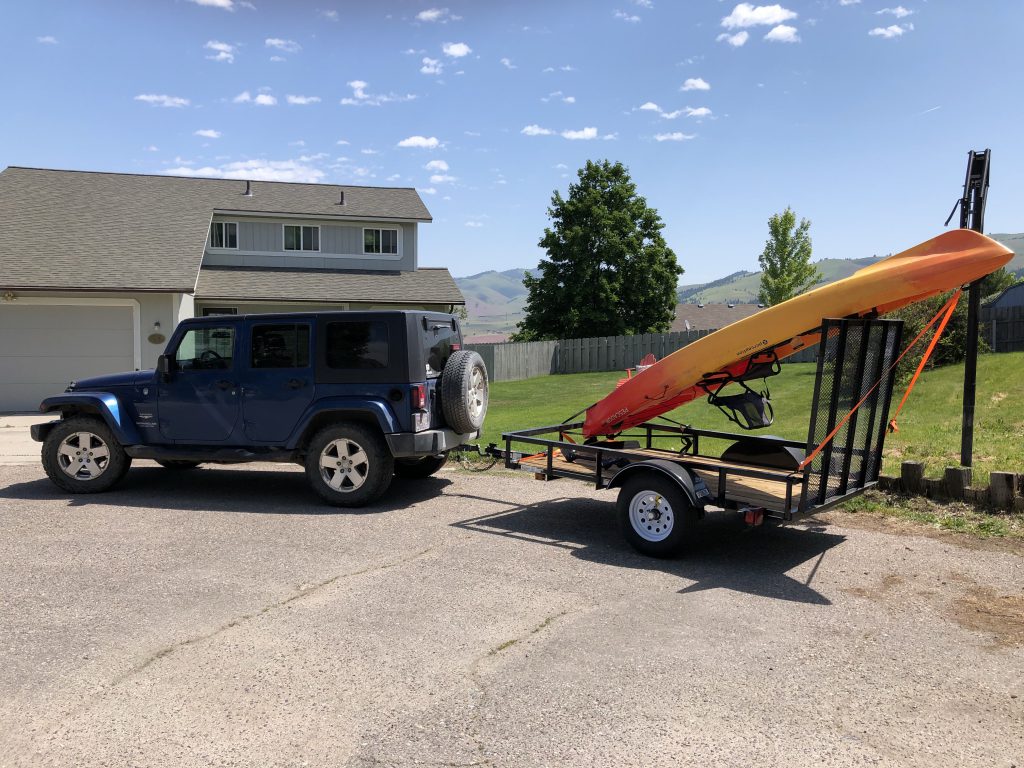
Being thus “in business,” on Wednesday, June 13, I hitched up the trailer with the kayak and headed to the Mission Dam, on a mission to photograph common loons. Well, I achieved some ho-hum shots – nothing special. But here’s what it cost:
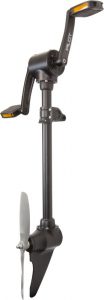
Upon arriving at Mission Dam, I discovered that the “Pilot drive” – that is the pedal propeller apparatus – had apparently bounced/fallen off the trailer. Yup, I fully acknowledge that this loss is entirely my fault and I’ve been beating myself bloody over it.
This is a stock product image, but illustrates what the apparatus looks like, except mine has an orange propeller.
I went out on the water Wednesday night anyway, using a paddle, but didn’t stay long, wanting to re-trace my route, hoping to find that Pilot drive. But I stayed long enough to get totally common photos of a not-so-common-as-the-name-suggests common loon.
Now, since then, I’ve pulled out all the stops, cast a wide net and taken every long shot (and mixed every metaphor) trying to recover this equipment.
I’ve contacted a construction company that was working on the highway along my route. I’ve contacted the road maintenance departments of the two counties I traveled in. I’ve posted on my Facebook profile. I’ve posted in classified ads.
So now you might be wondering where the “dangerous” part comes in. Well, of course I’m not just “sitting back” and hoping someone else will find this for me. Last night, Thursday June 14, I went looking. I re-traced my route, again. In my search, I was walking along a stretch of Mission Dam Road that has tall grass in the roadside ditch. When I was on my second pass along that stretch of road, walking back to my Jeep, an albino pitbull came running across a field toward me. It stopped and sat down and, for a minute or so, remained there. I thought perhaps there was an invisible fence boundary which it couldn’t cross. I was wrong. It charged. When I turned to face it, it stopped. But as soon as I took another couple steps, it charged again, halving the distance between us. I remained still and facing it for a minute and then took a few more steps. It charged again, again halving the distance between us. “Charged” is definitely the word for it. That sequence repeated until it was just a couple feet away from me, barking, snarling, growling, and giving me the red eye. Yes, red eyes – remember I said albino. Now, I’m a dog person. I am not fearful of dogs. I love dogs. Under other circumstances, I might have been most interested in meeting an albino dog. But I’m going to be honest and tell you that when a dog is menacing you with bared teeth, snarls, growls, barks and glaring red eyes, it’s intimidating. I tried talking calmly “hey, buddy, we’re cool, it’s okay.” It still threatened. So, I was faced with a long walk back to the Jeep, walking backwards, because if I even turned sideways to check my footing (after all, falling down could be disastrous) it used that opportunity to move up on me – and it was plenty close enough! How I wished the bear spray that was in the Jeep was in my hand! I yelled “Go Home!” several times. That would halt its approach momentarily, and I’d back off another several paces, but it would immediately close that gap again. This went on for several minutes (seemed like an hour, but my watch said differently) before a young woman driving with a toddler on her lap drove up and honked and yelled at the dog, then, for which I am very grateful, drove her car between the menace and me, yelling “Go Home!” at the beast and allowing me to gain some distance.
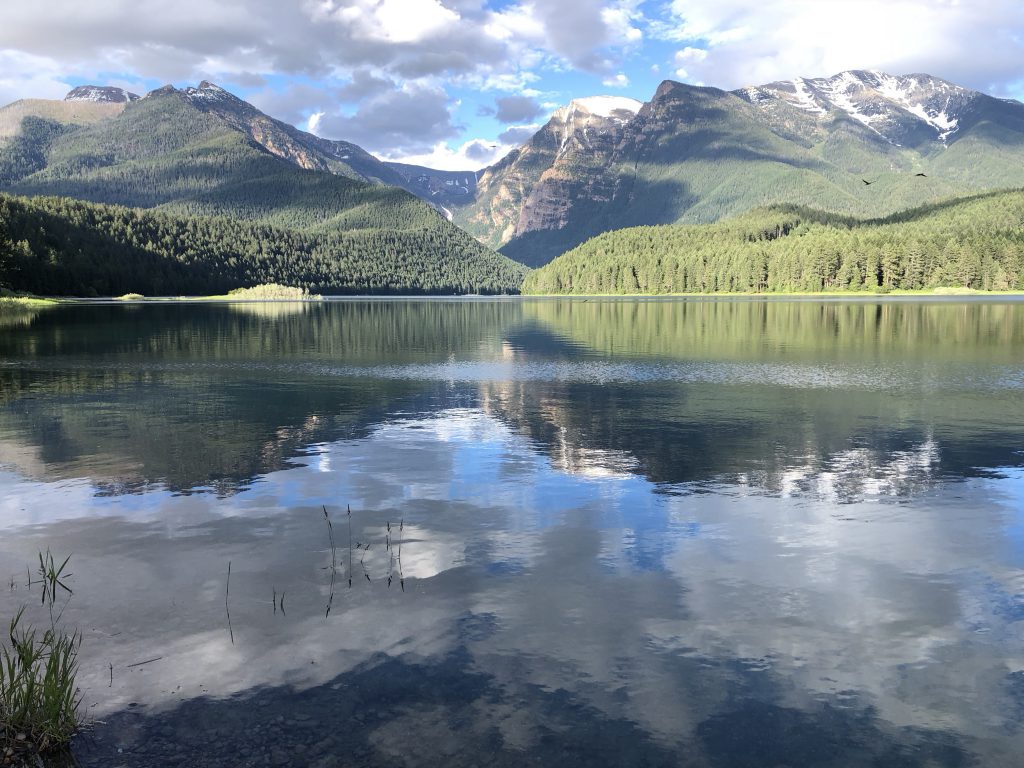
Upon arriving at Mission Dam, I enjoyed the view and watching distant loons through my binoculars and wishing I had a kayak with me. And thus it goes…
(iPhone photo – haven’t copied photos from the card that was in my “big” camera, yet)
So, now I have photos of a common loon, but it has cost a small fortune. I’ll keep looking and hoping, but, for now, it’s lost. Replacing the pedal drive any time soon is simply not in the cards and won’t likely happen this season.
In May of 2016, the server on which this blog is stored fell victim to ransomware and the database backup restoration failed. The blog was lost.
It has taken me a year to find the motivation to try to patch it back together. I found that the Wayback Machine Internet Archive had “captured” the blog fairly consistently. As such, I can copy many if not all of my post entries back into my blog. That will take some time, and I won’t expend the effort to copy all post entries back. I will re-post entries dated with their original entry date. Unfortunately, all comments made on blog posts are lost and will not be copied over.
Follow-up, June 11, 2018: I’ve copied as many entries as the Wayback Machine Internet Archive had captured for posterity. Some are missing – some of which were especially “fun” ones, but I’m grateful that many were captured and that I could restore them. Thanks, Wayback Machine!
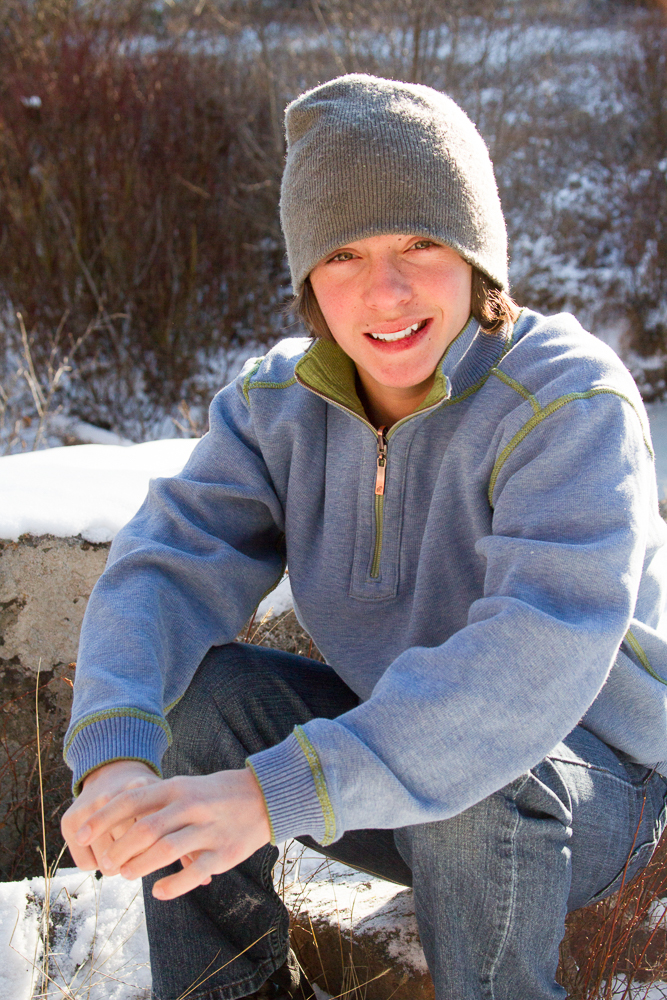
Bridger Evan Lowery, 14, of Lolo Montana, born April 16, 2001, joined his little brother, Colter, in heaven on October 9, 2015 following a sudden and devastating illness, complicated by arterial damage that occurred in a procedure during his hospitalization.
Bridger was a young man of varied interests – and when he devoted himself to an interest, he became encyclopedic about it. As a little boy, that interest was dinosaurs. He knew the name and period of them all, and if he ever saw a toy dinosaur that wasn’t correct – an upright t-rex, for example – Bridger would be most critical of that inaccuracy. Bridger was never afraid to share his opinion, even with authorities. He was a fan of Montana’s famous paleontologist Jack Horner, but not a fan of Mr. Horner’s stated theory that t-rex was a scavenger, and, upon a chance encounter with Jack Horner downstairs at the Museum of the Rockies, he told Mr. Horner so in no uncertain terms.
Bridger’s interests changed over the years. A few years ago, his mission was to memorize as many digits after the decimal point in Pi (3.14159…) as he could. That Halloween, when trick-or-treating, his mom was taken aback to hear him reciting Pi (all the way out past 64 digits before applause drowned him out) on a doorstep. An older boy passed by Bridger’s mom saying “Lady, your kid is a genius.” His mom learned that the home was owned by a math teacher who was demanding that trick-or-treaters state a math fact.
Bridger was a warm, loving and affectionate young man. Bridger loved teaching, caring for and playing with younger children – especially his beloved cousin, Retta (Loretta Rose La Salle). 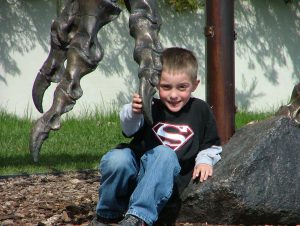
He loved every minute of the time he was able to spend with his cousins Abby and Henry Powers-Lowery, his cousins Elisha and Reannan Malcom as well as his Cronk cousins and extended Lowrey family cousins. His parents were always very proud to receive compliments on how wonderful Bridger was with the littles.
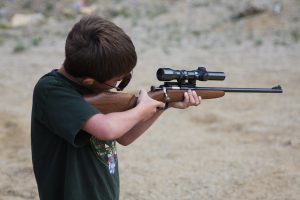 Bridger loved spending time with his grandparents – shopping trips with his Grandma Martha and Grandma Kay, staying for weeks with his grandparents in Anaconda, playing on the floor with his Papa David, and trips to the shooting range and off-roading with his Papa Leo in Papa Leo’s 1964 Willys Kaiser. He loved attending our semi-annual Lowrey Family Reunions. Bridger loved spending time with his grandparents – shopping trips with his Grandma Martha and Grandma Kay, staying for weeks with his grandparents in Anaconda, playing on the floor with his Papa David, and trips to the shooting range and off-roading with his Papa Leo in Papa Leo’s 1964 Willys Kaiser. He loved attending our semi-annual Lowrey Family Reunions.
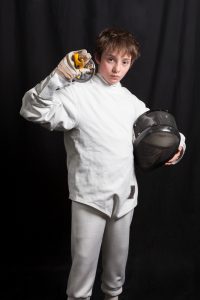
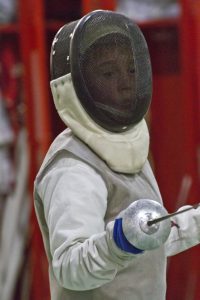
Bridger was a fencer, active in the Missoula Fencing Association, and competed in a Montana Youth Cup tournament at the Missoula Fencing Association just days before he fell ill. Bridger competed in the foil events. Perhaps not coincidentally, he was also a huge fan of The Princess Bride (the movie and the novel).
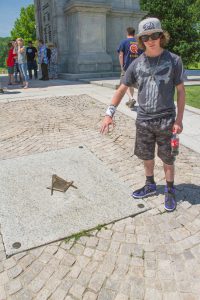
Bridger aspired to join the Navy and held the members of the US Armed Services in very high regard. Bridger was also very keen to join the Freemasons. On our family travels, he always made sure that a stop by a Masonic Temple was on the agenda, and last summer he was thrilled to see the incredible Masonic Temple in Philadelphia and pointed out every Masonic symbol at other historic sites, such as Valley Forge.
 Bridger was a gamer and a YouTuber. Of late, his favorite game was Destiny, and when he was at Seattle Children’s Hospital, Bungie, the makers of Destiny, learned of his condition and sent him a collection of Destiny swag that he would have treasured and which we will treasure for what it would have meant to him. He spent many hours playing video games and sometimes recording his game play, with commentary, which he posted on YouTube and often live-streamed. He played online with his friends, and his shouts and laughter would echo through the house. In one of those videos, recorded 5 months ago, for reasons we will never know, Bridger said he wanted to be buried wearing a suit like James Bond – the Sean Connery James Bond – the best James Bond. Seattle Children’s hospital has kindly provided that suit. His other stated desires were to be buried with his treasured Razer Kraken headphones, which were always on his head or around his neck, and his PS4. That his iPod Touch would be in his hand is a given. We are sure there is no lag, no trolls, and no game hacker/glitcher cheaters where he is playing now. Bridger was a gamer and a YouTuber. Of late, his favorite game was Destiny, and when he was at Seattle Children’s Hospital, Bungie, the makers of Destiny, learned of his condition and sent him a collection of Destiny swag that he would have treasured and which we will treasure for what it would have meant to him. He spent many hours playing video games and sometimes recording his game play, with commentary, which he posted on YouTube and often live-streamed. He played online with his friends, and his shouts and laughter would echo through the house. In one of those videos, recorded 5 months ago, for reasons we will never know, Bridger said he wanted to be buried wearing a suit like James Bond – the Sean Connery James Bond – the best James Bond. Seattle Children’s hospital has kindly provided that suit. His other stated desires were to be buried with his treasured Razer Kraken headphones, which were always on his head or around his neck, and his PS4. That his iPod Touch would be in his hand is a given. We are sure there is no lag, no trolls, and no game hacker/glitcher cheaters where he is playing now.
One of Bridger’s videos: Assault On Dragon Keep Part 2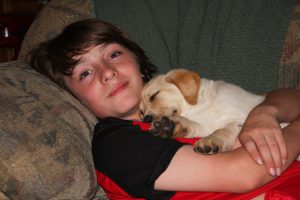
Bridger joins his grandfather David Lowery, his brother Colter Lowery, and his much loved dogs, Brutus and Cooper, and leaves behind his heartbroken parents, Matthew Lowery and Katie La Salle-Lowery of Lolo, his grandmother Martha Lowery of Missoula, his grandparents Leo and Kay La Salle of Anaconda, his uncle and aunt David and Susan Lowery of Missoula, his aunts Ann Lowery and Allison Powers of Cambridge, Massachusetts, his Buntie (aunt) Stacy La Salle of Anaconda, his cousin Loretta La Salle of Anaconda, his cousins Abigail Powers-Lowery and Henry Powers-Lowery of Cambridge, Massachusetts, cousins Elisha and Reannan Malcom of Anaconda, his God-parents Cody and Blakely Phillips of St. Ignatius, many much loved great aunts and uncles, extended cousins, several “honorary” uncles, and a wonderful group of buddies.
Bridger’s family is grateful for the love and support they received during his hospitalization and continue to receive from family and friends both local and around the world.
Suggested recipients of memorial contributions are the Bridger Lowery Memorial Scholarship Fund at the Missoula Fencing Association (www.missoulafencing.net), Masonic Charities (www.grandcharity.org), or to the children’s charity of donor’s choice. Also, if you are able to donate blood products, please do so. Bridger received over 40 units of blood products in the effort to save his life.
Letter sent to the Yellowstone NPS office:
I am a frequent Yellowstone camper. I’m accustomed to feeling compelled to “tutor” campers around me on just about every trip due to garbage, food, coolers, gray water catch basins for pop-up campers, etc. being left out when not in use or overnight, and other bear country (or just clean camp) basics. I’ve often found unattended campfires left by departing campers that I’ve put out (several times during the extreme fire danger of September 2012 at Lewis Lake CG, I put out unattended campfires – fires that kicked up after campers departed without drowning their fires).
When I arrived at the Tower CG on Monday June 9, 2014, I was greeted at the entrance by the host Ray. Ray delivered a little welcome and “here are the things you need to know” speech. I was grinning through it and Ray, seeing my expression, said ” you might already know all this but it’s my job.” I wasn’t grinning with chagrin at the lecture or the lack of necessity of it in my case, I was grinning because I was very pleased that all arrivals were being greeted with that information. That’s great!
Ray made regular rounds around the campground, visiting with campers and advising them in a friendly and helpful way. For the first time in ages, I didn’t feel the need to advise people about putting things away. Ray had it well covered and, having been informed from the get-go, people were keeping things tidy.
In all the times I’ve camped in Yellowstone, I’ve never been greeted at the CG entrance with information like that. There have been occasions that I’ve seen CG hosts making the rounds and talking to and advising people, but those have been the exception, not the norm. I’ve never seen a CG host walking around helping campers with information like Ray did so very well. I spent 3 days at Norris before moving to Tower and never even saw a campground host.
Ray was present and helpful, without ever being intrusive. When Ray made his final rounds on his last day at Tower, I thanked him in person for the wonderful job he was doing, but I want to let the Park Service know (you probably already do) what a great host Ray is. I think he would be a great mentor for others hosts as well as campers.
|
|


Recent Comments