Once again I celebrated Independence Day by spending the day as a spectator guest at the Annual Arlee Celebration powwow in Arlee, Montana, on the Flathead Reservation.
The powwow’s Fourth of July roots go back to the late 1800s, when the reservation’s federal Indian agent told the tribes here that such celebrations were being permanently banned.
It was, the agent explained, time for the Indians to walk away from their traditions and join white society.
So the local Indians told the agent that instead of a powwow, they would throw a party to honor America’s birthday.
“The chief was kind of smart,” Arlee says. “He convinced the agent they were celebrating the Fourth of July.”
In reality, it was the first Arlee Powwow.
A tradition was established with that first Arlee Celebration that is going strong to this day as the 113th Annual Arlee Celebration is held. Over the years, the dances and the regalia have changed as new traditions have been added but the spirit of tradition remains solid. One of these years I need to go on Old Style Day to see the traditional dances of the Salish People. Gaining an understanding of the stick game and other traditional games played at the Celebration is also on my to-do list.
On the Fourth of July, the dance events begin with the Snake Dance.
The Snake Dance was done to begin a War Dance. It was led by a chosen man who gathered the dancers at a designated spot, generally at the camp of the Chief of the celebration. The dancers danced in a single file towards the dance pavilion with the leader weaving and doubling back in in the fashion of a snake. The drummers and singers followed the group singing the Snake Dance song.
~Johnny Arlee, Over a Century of Moving to the Drum (also available online at Amazon & Barnes & Noble if you want a copy and ordering via paper isn’t your thing)

Following the Snake Dance (this year, after a few inter-tribal dances) is the Veterans’ Dance. All Veterans, from all Nations and nationalities, are encouraged to participate in this dance, that they may be honored and thanked for their sacrifices. They are led into the pavilion by the flag bearer. Prayers of thanks are spoken (first in Salish, then in English).
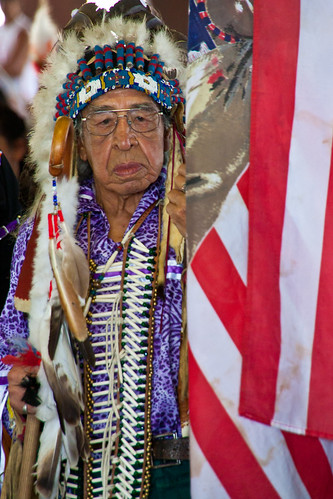
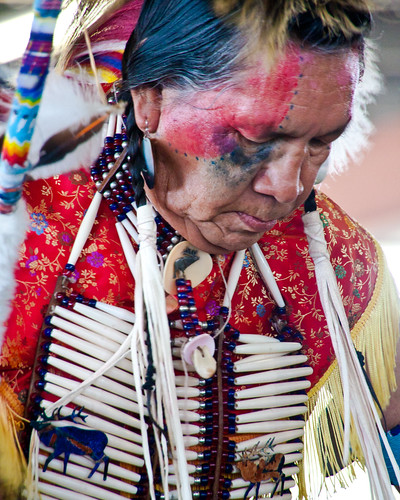
After the Veteran’s Dance, inter-tribal and competition dances are held. Among the competition dances are Traditional, Fancy (Fancy Shawl), Grass, and Jingle. Each dance has it’s own character. Contests are broken up into age brackets. The participating drums (each drum is a group of 5 or more drummers & singers) take turns drumming & singing with the turn passing to the next drum with each song. The drumming and singing penetrate every sense.
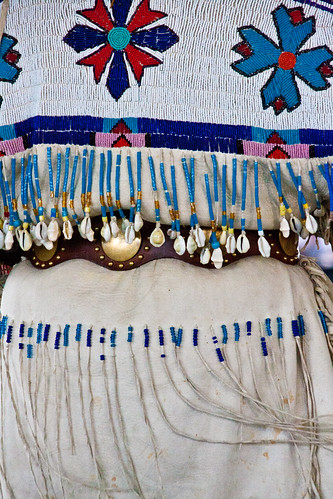
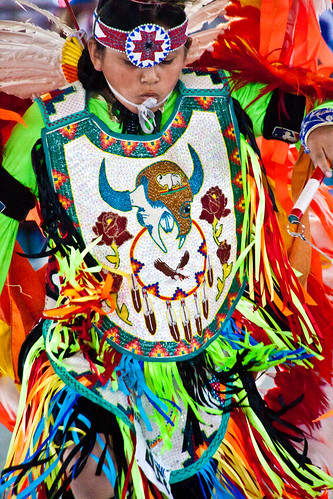
Among the entrants in the teen brackets were this beautiful teen Fancy dancer, her beautiful face barely revealing the effort to remain graceful as a butterfly in the second dance as heat and fatigue charge their due, and this handsome Traditional dancer, whose movements and posture tell a story.
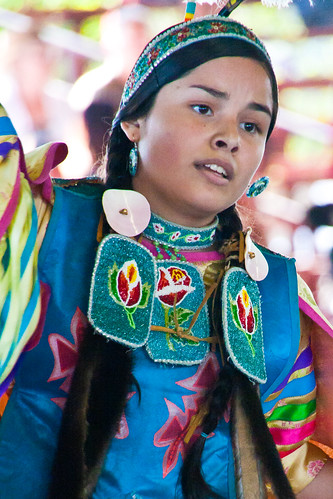
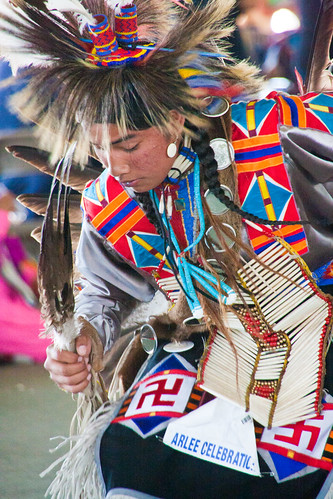
I am always amazed the level of expertise and artistry that is displayed in the ceremonial regalia, from traditional leather, seashells, elk ivory, beads and feathers of traditional regalia to the bright colors, sequins and appliqué designs of more modern regalia such as that worn by Fancy Dancers.
Regarding the Salish language:
The Salish language is currently spoken by less than 50 people, most of whom are over 75 years old. There are no first language fluent Salish speakers under 50.
~Nkwusm Salish Language Institute
If you would like to make a contribution to help support Salish language education, you can visit the website of the Nkwusm Salish Language Institute to make a donation or to purchase merchandise. I’m partial to the Griz Wear (Go Griz!) but other great items are offered as well, including books, bedspreads, bags, etc.
If you’d like to see more of my photos from the 113th Annual Arlee Celebration, you can find them here: http://www.bigskycountry.net/113th_arlee_celebration









Recent Comments